Recommended
No English review recommending it these 7 days had enough to say to show here.
Review Map › Games › Return to campus
Review Map · mapped 2 October

77%Mostly Positive
of all 1,768 reviews on Steam60%▼ 17
recommend it, last 7 days5▲ 400%
new reviews, last 7 daysPart of Review Explorer, $29 a month
Praise first, then complaints.
Example reviewAtmosphere
Recommended11 hours playedEnglishReturn to campus, developed and published by 聂宇星, is a sandbox-style indie project that leans heavily into player freedom, unpredictability, and a deliberately unfiltered interpretation of school life. Rather than presenting a structured narrative or clearly defined progression system, it drops players into a fully explorable campus environment and allows them to decide how they want to engage with it. At a glance, it resembles a life simulation game where you attend classes, interact with other students, and navigate daily routines, but it quickly becomes clear that the experience is far less grounded and far more experimental than that premise suggests. The core appeal lies in its open-ended design. Players are not bound by strict objectives, which means the game can be approached in wildly different ways depending on personal preference. You can follow a relatively normal student routine, attending lectures and interacting with the environment in a passive way, or you can embrace the game’s more chaotic systems, which allow for disruptive and often absurd actions. From bending the rules of the game world to outright ignoring them, the experience thrives on giving players tools rather than direction. This design creates a sense of agency that can feel refreshing, but it also means the game lacks a strong sense of purpose, leaving some players to create their own goals to stay engaged. Mechanically, the game mixes elements of simulation, sandbox interaction, and experimental systems that occasionally border on the surreal. Certain features—such as unusual physics interactions, exaggerated behaviors, and moments that feel almost dreamlike—blur the line between realism and fantasy. This inconsistency is both a strength and a weakness. On one hand, it keeps the experience unpredictable and often entertaining in unexpected ways. On the other, it can make the gameplay feel disjointed, as the rules governing the world are not always clearly defined or consistently applied. The result is a game that often feels more like a playground for ideas than a cohesive system. Visually, Return to campus shows clear ambition, especially considering it is the work of a single developer. The use of modern tools like Unreal Engine 5 allows for moments of impressive lighting, environmental detail, and scale, particularly in the layout of the campus itself. Walking through hallways, classrooms, and outdoor areas can feel immersive, with a sense of space that gives the world a believable foundation. However, this technical ambition is not always matched by polish. Character models, animations, and certain assets can feel uneven, creating a contrast between visually striking environments and rougher, less refined interactions. Another defining aspect of the game is its willingness to push boundaries in tone and content. It includes mature themes, dark humor, and scenarios that may not be comfortable or appealing to all players. This approach reinforces the idea that the game is meant to be provocative and unconventional rather than broadly accessible. For some, this adds to its identity and makes it stand out in a crowded indie space. For others, it may come across as excessive or unfocused, especially when combined with the already loose structure of the gameplay. Ultimately, Return to campus feels like a raw and highly personal project—one that prioritizes freedom and experimentation over refinement and structure. It does not aim to deliver a polished, tightly designed experience, but instead offers a sandbox where players can explore a wide range of interactions, from mundane to bizarre. Its success largely depends on what the player is looking for: those who enjoy open-ended systems and don’t mind rough edges may find it intriguing and occasionally entertaining, while players seeking clarity, balance, and a strong sense of direction may struggle to stay invested. Rating: 7/10
Bars compare each theme with the one mentioned most. We don’t print counts: 169 recent reviews are a sample, not a measure of the game.
The last 7 days against the 7 before. Point at a day for its counts.
Recommended, last 7 days3Not recommended, last 7 days2
Steam’s top-ranked review for and against it in these 7 days, in English. Votes as they stood when this map was made.
No English review recommending it these 7 days had enough to say to show here.
No English review against it these 7 days had enough to say to show here.
Each language’s share of its reviews, and how many in that language recommend it.
| Language | Reviews | Share | Recommend itthe tick is every language, 77%; the chip is the gap |
|---|---|---|---|
| Simplified Chinese | 1,492 | 84% | 80%+3 |
| English | 93 | 5% | 69%−8 |
| Russian | 42 | 2% | 55%−22 |
| Turkish | 33 | 2% | 36%−41 |
| Traditional Chinese | 25 | 1% | 88%+11 |
| Korean | 20 | 1% | 30%−47 |
| German | 17 | <1% | 41%−36 |
| Spanish | 10 | <1% | 60%−17 |
| 14 other languages | 36 | 2% |
All reviews ever, as Steam counts them, with each language’s own Steam score.
Review Explorer
For market research and competitive intelligence: map any game whenever you like, compare up to five side by side, and keep the ones you follow on a watchlist.
Already a member? Sign in
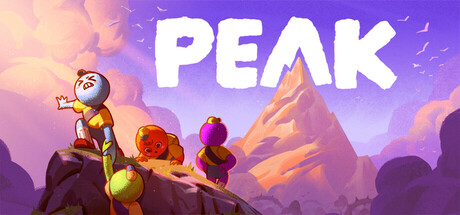 PEAK
94%Very Positiverecommend it, of 376,159 reviews
1,808 new reviews, last 7 days
1Great with friends2Funny moments3Replayability4Bugs and crashes5Lost my progress
PEAK
94%Very Positiverecommend it, of 376,159 reviews
1,808 new reviews, last 7 days
1Great with friends2Funny moments3Replayability4Bugs and crashes5Lost my progress WEBFISHING
97%Overwhelmingly Positiverecommend it, of 70,479 reviews
38 new reviews, last 7 days
1Great with friends2Hard to put down3Atmosphere4Bugs and crashes5Lost my progress
WEBFISHING
97%Overwhelmingly Positiverecommend it, of 70,479 reviews
38 new reviews, last 7 days
1Great with friends2Hard to put down3Atmosphere4Bugs and crashes5Lost my progress Big Walk
96%Overwhelmingly Positiverecommend it, of 39,975 reviews
1,292 new reviews, last 7 days
1Great with friends2Atmosphere3Looks great4Bad solo5Funny moments
Big Walk
96%Overwhelmingly Positiverecommend it, of 39,975 reviews
1,292 new reviews, last 7 days
1Great with friends2Atmosphere3Looks great4Bad solo5Funny momentsGold: a theme two or more of them share. Point at one to find it in the others. In Review Explorer this is the start: each day’s reviews, every theme with the reviews behind it, and who reviews them in every language. Open it ↗︎