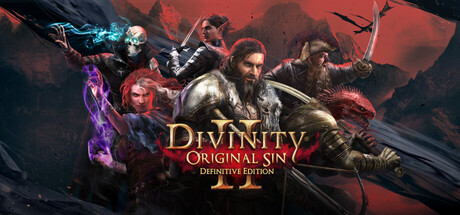
Divinity: Original Sin 2 – An RPG that made me feel like I was playing it wrong I might be in the minority here, as I only played this game for the first time recently. However, this is the first RPG of this type that I've ever uninstalled after finishing the first act. Before playing it, my only reference point for Larian's game design was Baldur's Gate 3. Here are my thoughts. Races and character creation There are the usual fantasy races, and they feel unique enough. However, there are also undead variants of every race. Unfortunately, at least in my experience, the undead races feel like they were added through a mod rather than designed as proper player character options. Why? Because the dialogue system seems to be designed primarily for living characters. Some dialogue options have an tag, but many don't. This often leads to situations where, despite playing an undead character, your only available dialogue options make absolutely no sense for someone who is undead. I usually enjoy creating custom characters in RPGs, but this is the first game I can remember where I deliberately chose a preset character instead. The origin characters simply felt much more fleshed out from a roleplaying perspective than the rather bland custom character options. Game modes and difficulty There are five different difficulty modes for the campaign. I chose Classic, expecting a fairly standard experience, but found it surprisingly punishing. While I sometimes felt that Baldur's Gate 3 was too easy, DOS2 went in the opposite direction. I often felt that I had to savescum for better rolls or reload saves from several hours earlier just to approach certain situations differently. I don't mind a challenge, but there's a difference between a game being difficult and a game making you feel like you need prior knowledge of its mechanics and encounters to avoid making mistakes. Being a completionist I chose Classic difficulty, and throughout the first act, I constantly felt like I was missing something. Eventually, I realized that sometimes I wasn't missing anything at all. The game was simply misleading me. There are several examples of this. The first one happens within the first hour. You encounter a woman looking for her daughter, and the game gives you a quest in your journal. Right next to her is a man who tells you that the daughter died a long time ago. So what do you do? Naturally, you start looking for the daughter. After all, it's a quest, right? Except the man was telling the truth. There is no daughter to find, and the whole thing is essentially a dead end. Thanks for wasting my time, I guess. A similar situation occurs when you enter a dungeon and encounter a cursed man who is slowly dying. You promise to find a cure for him, naturally assuming that this is something you can actually accomplish. Except there is no cure. It's not even a proper quest. The game simply lets you assume there is a solution and leaves you scratching your head, wondering what you're supposed to do. Another example involves a dog you encounter who asks you to find his dog friend. Sounds simple enough. However, there's a trigger in the game where leaving a certain area makes all the guards in the previous area hostile towards you, even if you managed to leave without being detected. This can prevent you from completing the quest because, when you eventually find the other dog, it will automatically be hostile towards you. But the worst example involves several quests that interact with each other in a way that can punish you hours after making an apparently harmless decision. During the main quest, you encounter a goddess who initially tricks you by taking the appearance of someone you love. She then asks you to become her champion. Later, you find her shrine, where she tries to trick you again. If you call her out and tell her she isn't your "mother", she gets angry and curses her own shrine. A few hours later, while doing other quests, you encounter a human who has been turned into a pig. The only way to turn the pig back into a human is to have her visit that same shrine and get cured. But if the shrine is cursed, the pig dies. So, depending on how much time you've spent playing between these events, you might have just locked yourself out of completing a quest several hours after making a decision that seemed perfectly reasonable at the time. And your only solution? Reload an old save and potentially replay hours of content. I understand that choices should have consequences, but this feels less like meaningful consequences and more like punishing players for not knowing things they couldn't possibly have known beforehand. It feels designed for hardcore players rather than newcomers This is probably my biggest issue with the game. Almost everything about its design makes me feel like I'm expected to have watched several hours of lore videos, read guides, and seen someone else play the game before starting my own campaign. The best example is Dallis. She's one of the game's main antagonists, and you first encounter her within your first hour of gameplay. The next time you meet her is towards the end of Act 1, where you can actually fight her. I spent hours savescumming until I finally managed to defeat her. However, I later discovered that apparently you can defeat her during that very first encounter as well, and the game provides different rewards depending on when you manage to do it. Which means that if, like me, you only defeat her at the end of Act 1, you've already missed out on the reward from the first encounter. Of course, defeating her at the beginning of the game is practically impossible through normal means when you're only a level 2 party. But apparently, there's a way: barrelmancy. For those unfamiliar with it, you can essentially exploit the game's physics by dropping an incredibly heavy chest on enemies and using its weight to deal absurd amounts of damage. In this case, you can use it to practically one-shot Dallis and her entire entourage. And that's where I reached my breaking point. I actually restarted the game just to try this trick myself. But the moment I started cheesing encounters with heavy chests because I felt I was missing out on rewards otherwise, I realized I wasn't enjoying the game anymore. I uninstalled it. Final thoughts I can see why people love Divinity: Original Sin 2. It has an enormous amount of freedom, interesting mechanics, and seemingly endless possibilities for approaching situations. But as someone coming from Baldur's Gate 3, I found its design frustrating in ways I wasn't expecting. I don't mind difficult encounters, complex mechanics, or choices with lasting consequences. What I do mind is feeling like I need a walkthrough open at all times to make sure I don't accidentally lock myself out of content, miss unique rewards, or waste hours pursuing something that was never possible in the first place. Maybe this is simply a game that rewards multiple playthroughs and players who enjoy experimenting with every possible interaction. That's fine. But for a first-time player who likes exploring everything and completing as many quests as possible, the experience can be incredibly frustrating. I wanted to enjoy this game, but eventually it started feeling more like a test of how much obscure information I already knew than an adventure I could experience naturally.